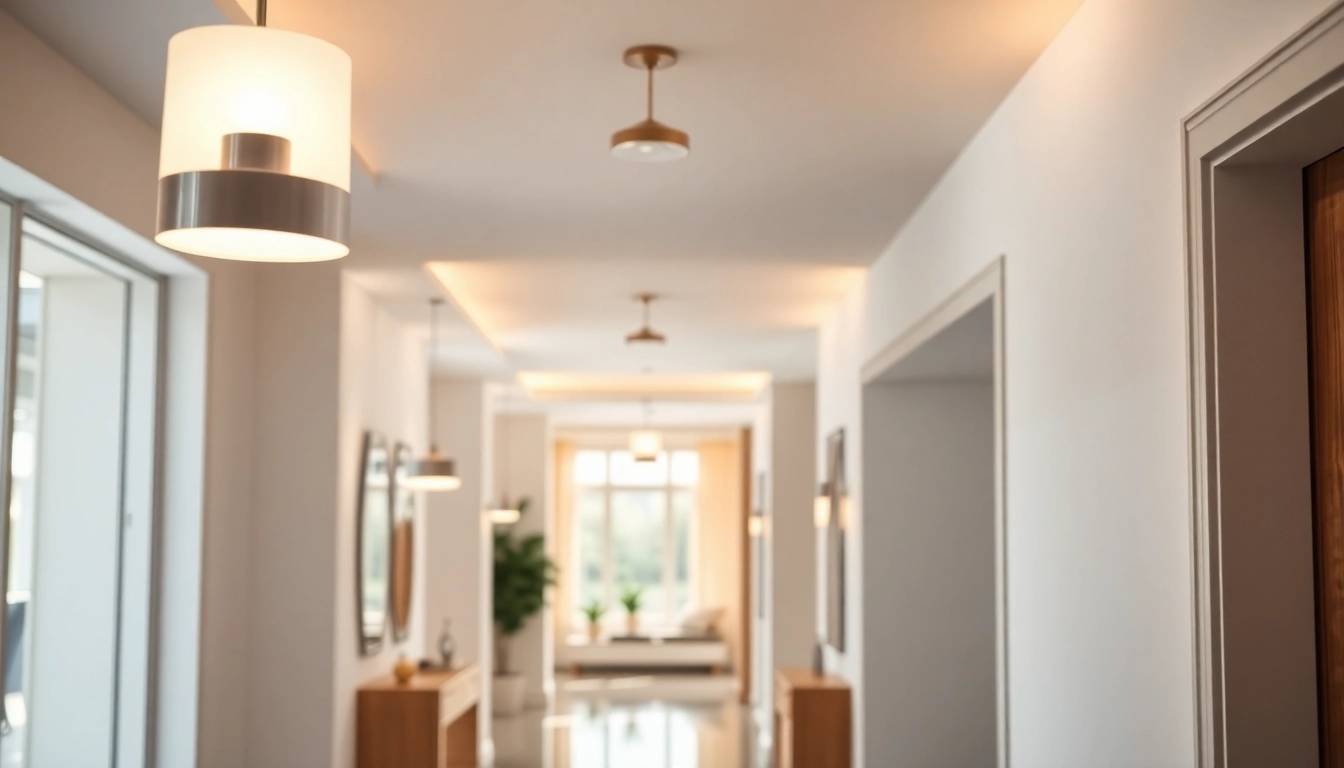
Understanding Hallway Lighting Fixtures
What Are Hallway Lighting Fixtures?
Hallway lighting fixtures are specialized lighting solutions designed to illuminate corridors, passageways, and transitions between different spaces within a home. Because hallways often lack natural light, these fixtures play a crucial role in enhancing visibility and safety. They come in a variety of styles, including wall sconces, recessed lighting, flush mounts, and pendant lights, providing options to fit almost any décor and functional need. A well-lit hallway not only serves practical purposes but can also enhance the overall aesthetic of your home, allowing for creative expression and spatial definition.
Importance of Proper Hallway Lighting
Proper hallway lighting is essential for several reasons. First and foremost, it improves visibility, making pathways safer by reducing the risk of accidents. Additionally, well-placed hallway lighting fixtures can create a welcoming atmosphere and guide guests through your home. Moreover, effective lighting can accentuate architectural features and artwork, adding depth and interest to an otherwise utilitarian space. Furthermore, a well-designed lighting plan can enhance the efficiency of your home’s overall energy use, proving both functional and sustainable.
Types of Hallway Lighting Fixtures
Finding the right hallway lighting fixtures involves understanding the various types available. Each type serves different aesthetic and practical purposes:
- Wall Sconces: These fixtures are mounted on walls, providing a soft glow and often serving as decorative elements.
- Recessed Lighting: Installed into the ceiling, recessed lights provide unobtrusive illumination and can be used to highlight specific areas or artwork.
- Flush Mount Fixtures: These ceiling-mounted fixtures sit close to the ceiling, making them suitable for low ceilings and providing bright, even light.
- Pendant Lights: Hanging from the ceiling, these fixtures can serve as focal points and are ideal for creating a stylish statement.
- Track Lighting: Adjustable fixtures that allow you to direct light where it's needed most, perfect for highlighting artwork or architectural features.
Choosing the Right Hallway Lighting Fixtures
Factors to Consider When Selecting Fixtures
Choosing the ideal hallway lighting fixtures involves several considerations that ensure both functionality and style are achieved. Start by assessing the size of your hallway. Wider and longer hallways may require multiple fixtures to distribute light evenly, while smaller corridors can often be sufficiently illuminated with a single fixture. Additionally, evaluate the existing decor and color schemes; choosing fixtures that harmonize with your design can enhance aesthetic coherence.
Size and Scale of Hallway Lighting Fixtures
The size and scale of fixtures are critical in hallway design. Oversized fixtures in narrow hallways can create a cramped feel, while small fixtures in larger spaces might go unnoticed. A good rule of thumb is to select fixtures that are proportionate to the size of the hallway. For instance, if your hallway is long and narrow, consider narrow-profile wall sconces or a series of recessed lights spaced evenly along the ceiling to maintain visual balance and provide sufficient illumination.
Style Compatibility with Home Decor
The style of your hallway lighting fixtures should seamlessly blend with the overall interior design of your home. Whether your home exudes a modern, traditional, or eclectic feel, the lighting fixtures you select can complement or conflict with these themes. For a minimalist home, sleek, contemporary designs work best, whereas vintage-inspired fixtures can enhance the charm of a rustic or traditional space. Don’t forget to consider the finish and material—brushed nickel, bronze, or even wood can play important roles in cohesion.
Placement Strategies for Hallway Lighting Fixtures
Optimal Height for Installation
Proper installation height is vital for maximizing the effectiveness of hallway lighting fixtures. The common recommendation is to install wall sconces approximately 5 to 6 feet above the floor, which allows for adequate illumination without being obtrusive. For ceiling fixtures, consider the height of your ceiling; general guidance suggests that flush mounts should fit comfortably within a space, preserving headroom while providing optimal lighting.
Layering Light: Ambient, Task, and Accent
Effective hallway lighting should encompass a layered approach, consisting of ambient, task, and accent lighting. Ambient lighting provides the overarching illumination needed for safety and visibility. This can be achieved through recessed lighting or flush mounts. Task lighting, often provided by wall sconces or pendant lights, focuses on specific areas that require more direct light, such as desks or entry points. Accent lighting can be utilized to draw attention to artwork or architectural details, providing a dynamic and visually exciting environment.
Creating Focal Points with Lighting
Utilizing hallway lighting to create focal points can significantly enhance the visual appeal of your space. Consider placing striking pendant lights at key junctions or at the ends of hallways to draw the eye. Elsewhere, wall-mounted artwork can be artfully illuminated with accent lights to create visual interest. The strategic placement of lighting can transform standard hallways into engaging narratives that guide visitors through your home.
Energy Efficiency and Hallway Lighting Fixtures
Choosing Energy-Efficient Bulbs
Selecting energy-efficient bulbs is one of the most effective ways to reduce energy consumption in hallway lighting fixtures. LED bulbs are becoming increasingly popular choices due to their longevity and efficiency. Unlike traditional incandescent bulbs, LEDs can provide the same amount of light while consuming a fraction of the energy. They also emit less heat, making them a safer option for enclosed spaces such as hallways, where temperatures can rise.
Smart Lighting Solutions
Incorporating smart lighting solutions can further enhance both the functionality and efficiency of hallway lighting fixtures. Smart bulbs can be controlled remotely or programmed to adjust brightness and color temperature based on the time of day or occupancy. Motion sensors can also be integrated into fixtures, providing light only when the hallway is in use, which not only conserves energy but adds an element of convenience to your home’s lighting scheme.
Reducing Energy Costs Without Sacrificing Style
It is entirely possible to achieve energy efficiency in hallway lighting without compromising on style. Choosing fixtures that accommodate LED bulbs or incorporating dimmers can provide exquisite ambiance while ensuring lower energy bills. Additionally, selecting fixtures made from sustainable materials can offer both aesthetic charm and environmental benefits. By blending innovative designs with energy-saving technologies, homeowners can create beautiful, cost-effective lighting solutions.
Maintenance Tips for Hallway Lighting Fixtures
Cleaning Methods for Different Materials
Regular upkeep is essential in maintaining the functionality and aesthetic of hallway lighting fixtures. Different materials require varied cleaning methods. For glass fixtures, a gentle solution of warm water and a few drops of dish soap can effectively remove grime without damaging the material. Metal fixtures may require polishing with appropriate cleaners that suit their finishes, while painted or wooden fixtures should be dusted with a dry cloth to avoid moisture damage.
Regular Maintenance Checks
Conducting routine maintenance checks can prevent unexpected failures and extend the lifespan of your lighting fixtures. Regularly inspect bulbs for any signs of dimming or flickering and replace them promptly. Check for corrosion or debris, particularly in wall-mounted or exposed fixtures, and ensure that all electrical components are functioning properly. Establishing a maintenance schedule can safeguard the integrity of your fixtures, ensuring consistent performance.
When to Replace or Upgrade Fixtures
If hallway lighting fixtures exhibit frequent issues or stylistic mismatch with your evolving decor, it may be time for an upgrade. Signs that replacement is needed include persistent flickering, unusual noises, or visibly damaged components. Additionally, upgrading can be a significant opportunity to enhance energy efficiency, so consider modern fixtures featuring smart technology or LED compatibility.
Frequently Asked Questions
What type of lighting is best for hallways?
Recessed and wall-mounted fixtures, such as sconces, are often ideal for hallways, providing soft, ambient light while maintaining a stylish aesthetic.
How can I make my hallway look bigger with lighting?
Using layered lighting, especially recessed fixtures and mirrors, can create the illusion of space and make your hallway feel larger and more inviting.
Are LED lights suitable for hallway lighting?
Yes, LED lights are excellent for hallway lighting because they are energy-efficient, long-lasting, and available in a variety of brightness levels and colors.
How high should sconces be placed in a hallway?
Wall sconces should generally be installed about 5 to 6 feet above the floor for optimal lighting and to avoid headroom issues in the hallway.
When should I consider replacing hallway lighting fixtures?
If fixtures are frequently malfunctioning, visibly damaged, or no longer suit your interior design, it's a good idea to consider upgrading them for better performance and style.